June 23rd-25, 2026
UC San Diego

A three-day workshop exploring the intersection of artificial intelligence and multimodal scientific research

About AIMS26

AIMS2026 (AI for Multimodal Science) is a three-day interdisciplinary workshop that brings together Schmidt Science Fellows from around the world and UC San Diego postdoctoral researchers to explore how multimodal artificial intelligence can accelerate discovery across scientific domains.

Multimodal AI sits at the forefront of modern research, enabling the integration of heterogeneous data types—such as images, time series, text, graphs, and simulations—to address complex scientific questions. These methods cut across biology, medicine, climate science, physics, materials science, and computer vision, where insights increasingly emerge from the fusion of multiple data modalities rather than from any single source alone.

While scientific datasets are often domain-specific, the core principles of multimodal fusion are broadly transferable. AIMS2026 emphasizes both data-level multimodality and architecture-level multimodality. By focusing on generalizable fusion patterns and model designs, the workshop equips participants with approaches that can be readily adapted across disciplines—simply by swapping in their own domain's data, tasks, and evaluation metrics.

Through a combination of lectures, hands-on sessions, and collaborative discussions, AIMS2026 aims to foster a shared technical language for multimodal AI in science, build cross-domain connections among early-career researchers, and empower participants to apply state-of-the-art multimodal methods to their own research challenges.
Daily Schedule

8:00 AM - 9:00 AM

Breakfast

Light breakfast, badge and gift distribution

9:00 AM - 12:00 PM

Faculty, Industry, and Lightning Talks

Day 1 (Tuesday, June 23rd) & Day 2 (Wednesday, June 24th): Three long-format talks (45 min + 5 min Q&A each), with short breaks.

Day 3 (Thursday, June 25th): Two long-format talks, followed by four lightning talks by participants (15 min each).

12:00 PM - 1:00 PM

Lunch

Catered lunch and networking

1:00 PM - 2:30 PM

Demo / Coding Tutorial

Example topics:

  • Comparing single-modality vs. multimodal training results
  • Strategies for data fusion (early, intermediate, late)
  • Handling missing modalities and cross-modal alignment
2:30 PM - 3:00 PM

Afternoon Break

Coffee, tea, juice, and light snacks

3:00 PM - 5:00 PM

Afternoon Block

Hackathon (max ~25 participants) or Alternative Activities (max ~25 participants)

Room layout: Alternative activities will be in Room 15A, whereas Hackathon will be in Room 15B.

5:00 PM

Formal Program Ends

Daily sessions conclude.

5:30 PM - 7:00 PM

Evening Social Events

Organized programs on Day 1 and Day 3 only—see below. Day 2 is a free evening (suggestions below).

Hackathon Overview

Maximum ~25 participants

Purpose: Fun, hands-on, educational; light prizes for all participating teams.

Teams: 4–5 teams (4–5 participants each; max ~25). Teams may self-organize, or organizers can assist.

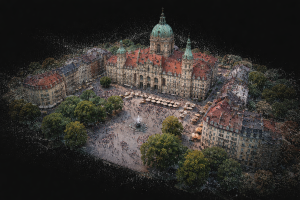
The hackathon focuses on building a 3D reconstruction pipeline using multiple sensing modalities, including images, radar, and/or LiDAR data. Participants will be guided through a complete end-to-end workflow that involves processing datasets from these diverse modalities and learning how to handle each modality individually to generate 3D scene representations in the form of 3D point clouds.

Building on this provided Python-based workflow, participants will then explore and implement strategies for effectively fusing data from different modalities, with the goal of producing the most accurate and comprehensive 3D reconstruction of a target scene.

Alternative Activities During Hackathon

Maximum ~25 participants

Day 1 — Tuesday, June 23rd Lightning Talks

Short participant lightning talks highlighting multimodal AI results, ongoing work, or data/resources. Each speaker shares a concise story or challenge statement, followed by brief Q&A.

Day 2 — Wednesday, June 24th Grant & Fellowship Writing — From Specific Aims to Storytelling

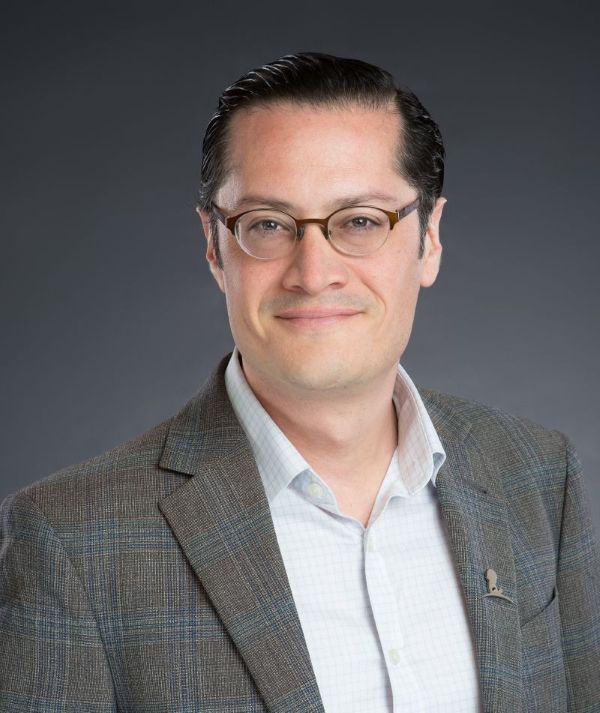
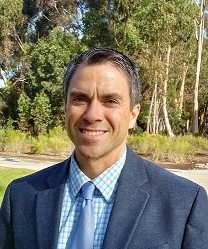
Jeff Gagnon

Jeff Gagnon

Led by Jeff Gagnon. Structured exercises, peer feedback, and short coaching rounds help participants draft or revise sections of proposals and research statements, with optional prompts focused on multimodal AI research (e.g., framing interdisciplinary datasets, highlighting integration of methods, or articulating broader impacts).

Day 3 — Thursday, June 25th Building Startups in the Era of Multimodal AI

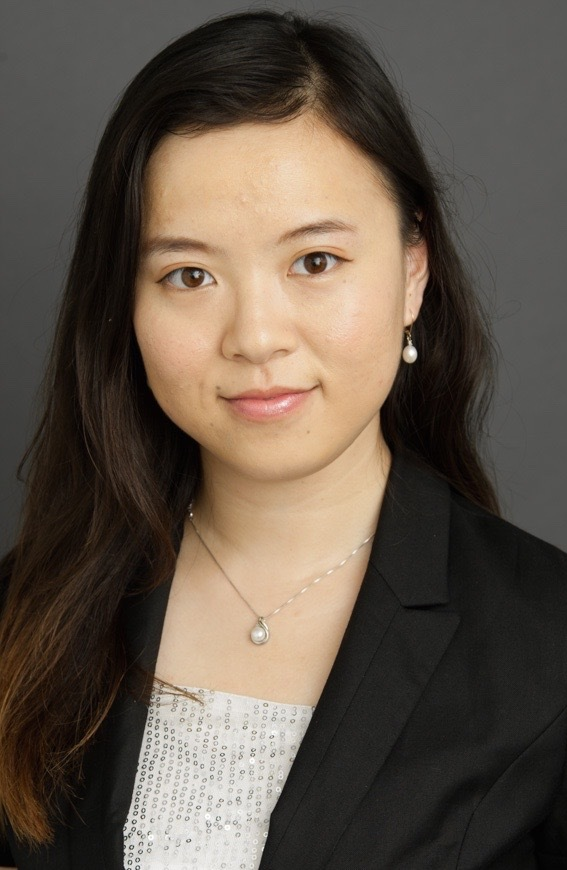
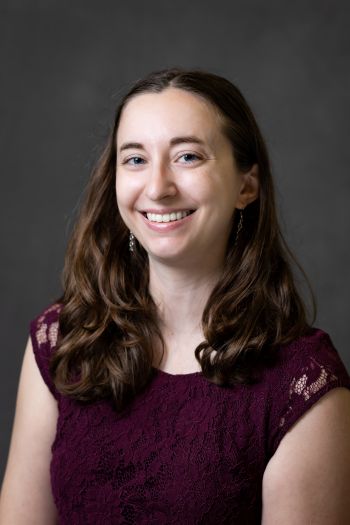
Maya Gosztyla

3:00–4:00 PM — Maya Gosztyla

Dr. Maya Gosztyla is a neuroscientist, entrepreneur, and AI-focused biotech leader at the intersection of artificial intelligence and brain organoid engineering. She is the Co-Founder and Chief Scientific Officer of BrainStorm Therapeutics, where she leads the development of patient-derived organoid and machine learning platforms to accelerate drug discovery for rare neurological disorders. Her work integrates multi-omics, bioinformatics, and high-throughput screening to identify therapeutic targets, and includes leading one of the largest drug repurposing efforts in rare pediatric epilepsy. Previously, she conducted Ph.D. research at UC San Diego developing organoid models and RNA-targeted therapies for neurological diseases.

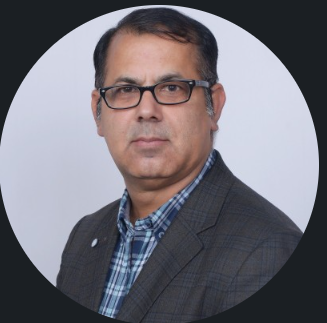
Haider Ali
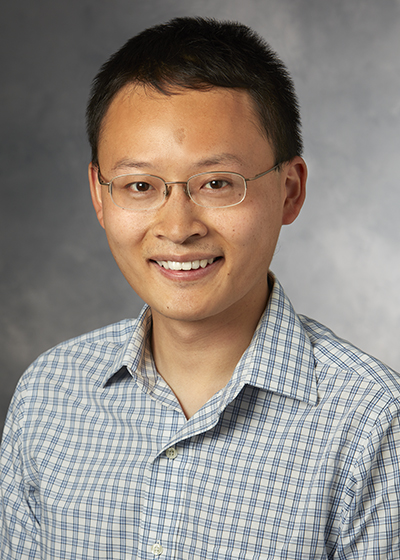
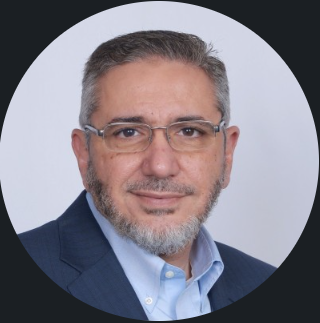
Amin Barhoush

4:00–5:00 PM — Amin Barhoush and Haider Ali

Amin Barhoush and Haider Ali are experienced technology leaders with deep expertise in engineering, artificial intelligence, and product development, spanning decades of work across industry and research. Together, they have built and scaled innovative solutions at the intersection of multimodal AI, computer vision, and complex systems, successfully taking multiple products from concept to production in fast-paced startup and industry environments. Their work reflects a strong focus on translating cutting-edge research into real-world impact, combining technical depth with strategic leadership to navigate the challenges of building and growing technology-driven ventures.

Social Events

Day 1 — Tuesday, June 23rd (5:30–7:00 PM) UCSD Sandbox Tour

Step inside the Goeddel Family Technology Sandbox and see state-of-the-art imaging and multimodal AI workflows in action. This tour is designed to spark cross‑university and cross‑department collaboration by showcasing shared infrastructure, open research challenges, and concrete pathways for joint multimodal systems projects. Pizza and refreshments will be served.

Day 2 — Wednesday, June 24th Free evening

There is no organized workshop event after the formal program ends at 5:00 PM—enjoy a free evening on your own. One informal suggestion: a sunset walk and ice cream at La Jolla beach.

Day 3 — Thursday, June 25th (5:30–7:00 PM) Awards Ceremony and Dinner Reception

The final day of AIMS2026 will conclude with a hackathon awards ceremony, featuring dynamic short demos, results presentations, and live audience voting, followed by the presentation of awards and special gifts. The workshop will then close with an evening dinner reception, creating a welcoming and celebratory atmosphere for participants to network, exchange ideas, and strengthen cross-disciplinary connections formed throughout the workshop.

Registration

Register using the official AIMS 2026 registration form.

Speakers

Distinguished researchers and practitioners in AI and multimodal science

Tuesday, June 23rd Day 1 Speakers

Tara Javidi

Tara Javidi

Jacobs Family Scholar, Co-Founder & CTO at KavAI and Lewak Chair and Professor of Electrical & Computer Engineering at UC San Diego

Biography Website LinkedIn
Hani Goodarzi

Hani Goodarzi

Core Investigator at Arc Institute | Associate Professor at UCSF

LinkedIn
Rose Yu

Rose Yu

Associate professor at UC San Diego department of Computer Science and Engineering | Amazon Scholar

Biography LinkedIn

Wednesday, June 24th Day 2 Speakers

Shalin Mehta

Shalin Mehta

Group Leader at the Chan Zuckerberg Biohub

Biography LinkedIn
James Zou

James Zou

Associate Professor at Stanford University

Biography LinkedIn
Ulugbek Kamilov

Ulugbek Kamilov

Leon and Elizabeth Janssen Associate Professor of Electrical and Computer Engineering at the University of Wisconsin–Madison

Biography LinkedIn

Thursday, June 25th Day 3 Speakers

David Van Valen

David Van Valen

Assistant Professor in the Division of Biology and Bioengineering at Caltech

Biography LinkedIn
Aaron Gilad Kusne

Aaron Gilad Kusne

Staff Scientist with the National Institute of Standards and Technology (NIST)

Biography LinkedIn

Venue

UC San Diego

University of California, San Diego
Seventh College – Tower West, 15th Floor, Room 15A
10176 Scholars Drive
La Jolla, CA 92093
USA

The workshop will be held at UC San Diego, one of the world's leading public research universities. The campus provides state-of-the-art facilities and a vibrant academic environment for interdisciplinary collaboration.

Virtual Tour of Room 15A

Explore the workshop venue with our interactive 360° virtual tour

Organizing Committee

Yasmin Kassim

Yasmin Kassim

Executive Lead Organizer
Scientific Program, Workshop Vision, Logistics and overall Coordination
Schmidt AI in Science Postdoctoral Fellow
Co-Vice Chair of Exposure to Industry Program, PDA
University of California, San Diego

Uri Manor

Uri Manor

Senior Scientific Advisor, Faculty Engagement & Partnerships Lead
Assistant Professor
Dr. David V. Goeddel Chancellor’s Endowed Chair in Biological Sciences
University of California, San Diego

Xiaoyu Zhao

Xiaoyu Zhao

Communications & Registration Lead
Schmidt AI in Science Postdoctoral Fellow
University of California, San Diego

Eleonora Rachtman

Eleonora Rachtman

Tutorials, Materials and Lightning Talks Lead
Schmidt AI in Science Postdoctoral Fellow
University of California, San Diego

Konstantinos Polyzos

Konstantinos Polyzos

Hackathon & Data Lead
Schmidt AI in Science Postdoctoral Fellow
University of California, San Diego

Tommie Velasquez

Tommie Velasquez

Event Logistics & Administrative Coordination
Academic Program Manager
The Goeddel Family Technology Sandbox
University of California, San Diego

Funding

This workshop is sponsored by Schmidt Sciences in partnership with University of California San Diego.

Institutional Support

This workshop is supported by the UC San Diego Postdoctoral Association (PDA) Executive Board and the Goeddel Family Technology Sandbox.

×

Yasmin Kassim

Yasmin Kassim is a Schmidt AI in Science Fellow and postdoctoral researcher at UC San Diego specializing in biomedical image processing, computer vision, and deep learning. She previously worked at the NIH and Akoya Biosciences and earned a PhD in Computer Engineering from the University of Missouri–Columbia, receiving the 2017 Outstanding PhD Student Award (EECS). Across academia and industry, she builds rigorous AI tools and foundation models that convert images into quantitative insight and scalable measurements, reflected in awards and a strong publication record. Looking ahead with Schmidt, she will channel this momentum into next-generation AI models and tools for organelle analysis and dynamics. Dr. Kassim's STEM Mentor is Uri Manor, and her AI Co-Mentor is Marc Niethammer.

×

Uri Manor

Uri Manor received his Ph.D. with Dr. Bechara Kachar in the Cellular, Molecular, Developmental Biology and Biophysics program at Johns Hopkins University-NIH Graduate Partnership Program and conducted his postdoctoral work in the Lippincott-Schwartz lab at the NIH. He then joined the Salk Institute for Biological Studies as Director of the Waitt Advanced Biophotonics Core in 2016, where he was the recipient of the Chan-Zuckerberg Imaging Scientist Award. He then joined the UC San Diego faculty in 2023 as an Assistant Professor and Director of the Goeddel Family Technology Sandbox.

×

Xiaoyu Zhao

Xiaoyu Zhao completed her PhD in cancer genomics at Stony Brook University. As a postdoctoral scholar in the Department of Medicine at UC San Diego, she is deeply interested in understanding the complex biological systems and human diseases by integrating genome editing technologies and artificial intelligence (AI) models. Her current focus is on developing deep learning models aimed at improving variant interpretation in the context of drug responses and disease progression. Dr. Zhao's STEM Mentor is Trey Ideker and her AI Co-Mentor is Vineet Bafna.

×

Eleonora Rachtman

Eleonora Rachtman earned her PhD in Bioinformatics and Systems Biology from UC San Diego and is now a postdoctoral scholar in Electrical and Computer Engineering. She develops algorithms to analyze big genomic datasets and infer evolutionary relationships between species. Her postdoctoral work focuses on incorporating deep learning into phylogenomic analysis, specifically by developing machine learning algorithms to add new species to large phylogenies without reconstructing them from scratch. This approach enhances existing binning and species identification techniques and aims to address challenges in bacterial and viral metagenomics, improving pathogen detection, understanding microbial diversity, and unraveling evolutionary dynamics of various species. Dr. Rachtman's STEM and AI Mentors are Siavash Mirarab & Davey Smith.

×

Konstantinos D. Polyzos

Konstantinos D. Polyzos is a Postdoctoral Fellow at the Electrical and Computer Engineering department (ECE) at University of California San Diego having recently obtained his Ph.D at the ECE department at the University of Minnesota. His research focuses on learning, inferring and optimizing with just a few data. Specifically, he has been developing and leveraging active-, transfer-, and self-supervised learning and Bayesian optimization methods to learn and/or optimize when only a few input-output data are available due to privacy concerns or high sampling costs, with application to healthcare, 5G networks and robotics. Dr. Polyzos' STEM and AI Mentor is Tara Javidi.

×

James Zou

James Zou is an associate professor of Biomedical Data Science, CS and EE at Stanford University. He works on developing cutting-edge AI for biomedical applications. His group developed many widely used innovations including EchoNet AI (FDA cleared for assessing cardiac function), Gradio (used by over a million developers), and SyntheMol (NY Times 2024 Good Tech). He has received the Overton Prize, Sloan Fellowship, NSF CAREER Award, two Chan-Zuckerberg Investigator Awards, a Top Ten Clinical Achievement Award, best paper awards at ICML and other AI conferences, and faculty awards from Google, Amazon, Adobe and Apple.

×

Shalin Mehta

As a senior manager (AI/ML) of computational imaging group at Biohub, I develop and apply cutting-edge technologies that combine optics, inverse algorithms, and machine learning to reveal the dynamics of cells with increasing precision, resolution, and throughput. I have over 15 years of experience in computational imaging, spanning from signal processing to deep learning. My team's mission is to enable and facilitate collaborative research that addresses fundamental and translational questions in biology and biomedicine. I also teach and mentor the next generation of scientists and engineers through special topics courses at the Marine Biological Laboratory and open source projects on GitHub.

×

Rose Yu

Rose Yu is an associate professor at UC San Diego department of Computer Science and Engineering and Amazon Scholar. She is a primary faculty with the AI Group.

Her research interests lie primarily in machine learning, especially for large-scale spatiotemporal data. She is particularly excited about AI for scientific discovery. She has won Presidential Early Career Award for Scientists and Engineers (PECASE), DARPA Young Faculty Award, ECASE Award, NSF CAREER Award, Hellman Fellowship, Faculty Awards from Sony, JP Morgan, Meta, Google, Amazon, and Adobe, several Best Paper Awards, Best Dissertation Award at USC. She was named as MIT Technology Review Innovators Under 35 in AI.

×

David Van Valen

David Van Valen is an Assistant Professor in the Division of Biology and Bioengineering at Caltech. Before becoming faculty, he studied mathematics (B.S. 2003) and physics (B.S. 2003) at the Massachusetts Institute of Technology, applied physics (Ph.D. 2011) at Caltech, medicine (M.D. 2013) at UCLA, and bioengineering as a postdoctoral fellow at Stanford University. At Caltech, his research group develops new technologies at the intersection of imaging, genomics, and machine learning to produce quantitative measurements of living systems with single-cell resolution. David is the recipient of several awards, including a Hertz Graduate Fellowship (2005), a Rita Allen Scholar award (2020), A Pew-Stewart Cancer Research Scholar award (2021), a Heritage Medical Research Investigator award (2021), a Moore Inventor Fellowship (2021), and the NIH New Innovator award (2022).

×

Aaron Gilad Kusne

A. Gilad Kusne received his B.S. and Ph.D. degrees from Carnegie Mellon University. He is a Staff Scientist with the National Institute of Standards and Technology (NIST), Gaithersburg, Maryland and a Fellow of the American Physical Society. His research is part of the White House’s Materials Genome Initiative at NIST, a project which aims to integrate experiment, computation, and theory to accelerate research discoveries to market. He leads machine learning teams of cross-disciplinary efforts to build autonomous research platforms, with the goal of advancing solid state, soft, and biological devices. For these systems, machine learning performs experiment design, execution (in the lab and in silico), and analysis. For his work, he has been awarded the NIST Bronze Award twice (top NIST award). He is also a founder and organizer of the annual Machine Learning for Materials Research Bootcamp and Workshop—educating next generation and mid-career researchers in machine learning.

×

Ulugbek Kamilov

Ulugbek S. Kamilov is the Leon and Elizabeth Janssen Associate Professor of Electrical and Computer Engineering (ECE) at the University of Wisconsin–Madison, where he founded and leads the Computational Imaging Group (CIG). He received his BSc/MSc in Communication Systems in 2011 and his PhD in Electrical Engineering in 2015 from EPFL, Switzerland. Prior to joining UW–Madison, he held academic and research appointments as the Donald L. Snyder Associate Professor at Washington University in St. Louis, Visiting Professor at École Normale Supérieure in Paris, Visiting Faculty Researcher at Google, and Research Scientist at Mitsubishi Electric Research Laboratories (MERL).

Prof. Kamilov is a recipient of the IEEE Signal Processing Society’s 2024 Pierre-Simon Laplace Early Career Technical Achievement Award, the IEEE Signal Processing Society 2017 Best Paper Award, and the NSF CAREER Award. He was named a Scialog Fellow for Advancing Bioimaging in 2021 and was a finalist for the EPFL Doctorate Award in 2016. In recognition of his teaching, he received the Outstanding Teaching Award from WashU’s Department of Electrical & Systems Engineering in 2023. He currently serves on the IEEE Signal Processing Society’s Computational Imaging Technical Committee, and has previously served as a Senior Editorial Board Member of IEEE Signal Processing Magazine, Associate Editor of IEEE Transactions on Computational Imaging.

×

Tara Javidi

Tara Javidi is Jacobs Family Scholar and Professor of Electrical and Computer Engineering at UCSD. Besides being an active member of Center for Wireless Communications (CWC), Tara is a founding co-director of the Center for Machine-Intelligence, Computing, and Security (MICS) and a Faculty Fellow of Halıcıoğlu Data Science Institute.

Tara Javidi’s research interests are in theory of active learning, information theory, and stochastic optimization and their applications to wireless communications and communication network design. She is a Fellow of IEEE, a Distinguished Lecturer of both IEEE Information Theory (2017/18) and Communications (2019/20) Societies, and a member of the Board of Governors of the IEEE Information Theory Society (2017/18/19-2020/21/22). She and her PhD students are recipients of the 2021 IEEE Communications Society & Information Theory Society Joint Paper Award. She also received the 2018 and 2019 Qualcomm Faculty Award for her contributions to wireless technology.